

CBD, or cannabidiol, is a non-intoxicating compound extracted from cannabis plants that’s widely marketed for pain relief, but the clinical evidence for arthritis specifically tells a different story. If you’re wondering whether CBD can genuinely ease your arthritis symptoms, here’s what the research actually shows: fifteen of sixteen randomized controlled trials found no greater pain relief from CBD than from placebo. In one two-month study focused on knee osteoarthritis, CBD oil performed no better than an inactive treatment.
That doesn’t mean cannabis has no role in arthritis care. Medical cannabis has been a legal treatment option in Canada since 2001, and the Arthritis Society Canada acknowledges it may help relieve pain and inflammation when used under proper healthcare supervision. The key distinction? Medical cannabis often contains a balance of CBD and THC, prescribed and monitored by an authorized healthcare professional, rather than the unregulated CBD products flooding retail shelves.
This article will walk you through what CBD is, how it’s thought to work, what the clinical trials reveal, and the legitimate medical cannabis pathway available in Canada. You’ll leave with a clear, honest picture of your options and next steps.
What CBD Is (and How People Use It for Arthritis)
Cannabidiol, better known as CBD, is a naturally occurring chemical compound found in the cannabis plant. Unlike THC (tetrahydrocannabinol), the compound that gets you high, CBD doesn’t produce intoxicating effects. Both are cannabinoids, but they interact with your body’s receptors differently. CBD has gained traction among people with arthritis because of its claimed anti-inflammatory and pain-relieving properties, though as we’ll see later in this article, the clinical evidence doesn’t quite support the hype.
- CBD
- A non-intoxicating cannabinoid extracted from cannabis or hemp plants, marketed primarily for pain relief and inflammation reduction.
- THC
- The psychoactive cannabinoid in cannabis responsible for the “high” sensation; used medically for pain and nausea but requires supervision.
- Cannabinoid
- A class of chemical compounds that interact with receptors in the body’s endocannabinoid system, influencing pain, mood, and inflammation.
- Full-spectrum
- CBD products containing all cannabinoids from the plant, including trace amounts of THC (usually under 0.3%).
- Isolate
- Pure CBD with all other cannabinoids and plant compounds removed, containing no THC.
- Bioavailability
- The proportion of CBD that actually enters your bloodstream and produces effects, which varies significantly by consumption method.
People use CBD for arthritis in several forms, each with different absorption rates and onset times. Oils and tinctures taken under the tongue are popular for their relatively quick absorption. CBD vape juices deliver the compound directly to your lungs, offering the fastest onset but raising questions about long-term respiratory safety. Topicals like creams and balms get applied directly to painful joints, though it’s unclear how much CBD actually penetrates the skin. Edibles and CBD gummies vs vape options offer convenience but take longer to work because they pass through your digestive system first.
What you’re actually consuming depends heavily on product quality and labeling accuracy, a significant concern in a market that’s still finding its regulatory footing in Canada.
How CBD Is Supposed to Work on Arthritis Pain
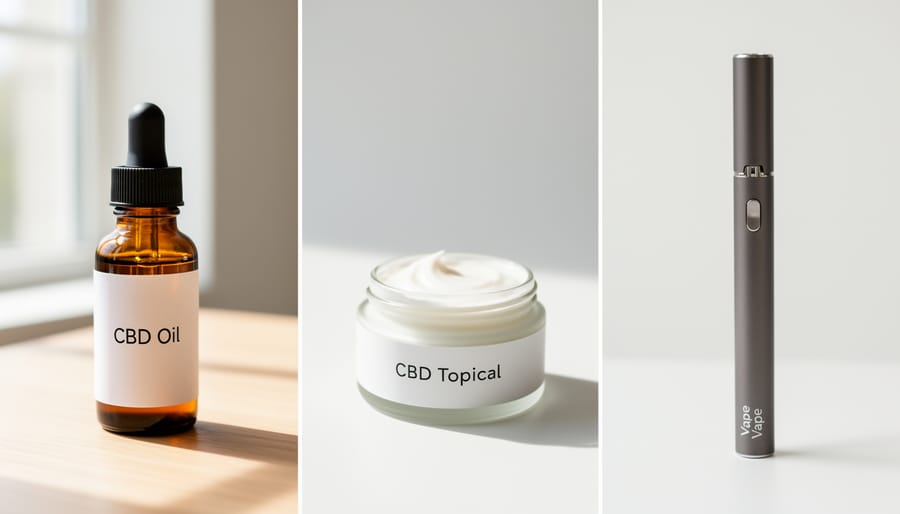
The theory behind CBD and arthritis pain centers on how cannabidiol interacts with your body’s endocannabinoid system, a network of receptors involved in regulating pain, inflammation, and immune responses. Unlike THC, which binds directly to cannabinoid receptors in the brain, CBD works indirectly by influencing how your body uses its own endocannabinoids and by interacting with other receptor systems involved in pain perception.
Proponents believe CBD could help arthritis in two main ways. First, its anti-inflammatory properties might reduce the swelling and joint damage that drive arthritis pain. Lab studies and animal research have shown that CBD can suppress inflammatory signals in cells, which sounds promising for conditions like rheumatoid arthritis where inflammation attacks healthy tissue. Second, CBD appears to modulate pain signals in the nervous system, potentially raising your pain threshold and making discomfort more manageable without the intoxication or addiction risks of opioids.
This dual action, targeting both inflammation and pain perception, explains why so many people with arthritis have turned to CBD products. The appeal is straightforward: a natural compound that addresses the root cause of joint inflammation while also easing the day-to-day pain that makes movement difficult. For vape users especially, the quick onset of inhaled CBD offers an attractive alternative to pills that take hours to work.
But theory and real-world results don’t always align. Understanding what CBD is supposed to do helps frame the more important question: does it actually deliver these benefits in human arthritis patients?
What the Clinical Evidence Actually Shows
The evidence for CBD’s effectiveness in arthritis is disappointing when you look at the actual clinical trials. In a rigorous 2-month trial showed no benefit over placebo among 43 participants with knee osteoarthritis. Participants used CBD oil throughout the study period, but when researchers measured pain levels and functional outcomes, CBD performed no better than the inactive placebo treatment.
This wasn’t an isolated finding. A comprehensive systematic review of randomized controlled trials, the gold standard for medical evidence, found that 15 of 16 trials were negative showing no greater pain relief from CBD than from placebo. That’s a striking consistency across multiple studies with different designs and patient populations.
What makes these findings particularly significant is that randomized controlled trials are specifically designed to eliminate bias and isolate the actual effect of a treatment. When 15 out of 16 such studies fail to show benefit, it suggests that whatever improvements people experience with CBD may stem from the placebo effect, natural symptom fluctuation, or other factors rather than the CBD itself.
This doesn’t mean everyone who reports improvement is lying or mistaken. Individual experiences can feel very real even when controlled studies don’t bear them out. But it does mean the scientific evidence doesn’t currently support CBD as an effective arthritis treatment, despite its popularity and the many positive testimonials you’ll find online.
Different Types of Arthritis and CBD Use

Arthritis isn’t a single condition. The term covers over 100 different types of joint disease, and the three most common, osteoarthritis, rheumatoid arthritis, and psoriatic arthritis, affect the body in different ways. That matters when we’re asking whether CBD helps, because the underlying mechanisms driving pain and inflammation vary.
Here’s what we know about CBD and the main arthritis types:
- Osteoarthritis: The most common form, caused by wear-and-tear cartilage breakdown. The 2-month randomized trial showing no benefit over placebo tested CBD specifically in knee osteoarthritis patients.
- Rheumatoid arthritis: An autoimmune condition where the immune system attacks joint tissue. No high-quality human trials have tested CBD for RA, though some early lab and animal studies suggested anti-inflammatory effects.
- Psoriatic arthritis: Another autoimmune type linked to psoriasis. Research on CBD for this condition is virtually nonexistent, with no clinical trials published to date.
The pattern is clear: the evidence base is weakest where the disease mechanism is most complex. Osteoarthritis, the simplest mechanically, has been studied, and CBD didn’t outperform placebo. The autoimmune types remain largely unexamined in humans.
That said, many people report subjective relief across all arthritis types, which is why anecdotal enthusiasm persists despite negative trial results. User experiences can feel real and meaningful even when controlled studies show no measurable advantage over placebo. This disconnect is important to understand before deciding whether to try CBD with medical supervision.
Medical Cannabis in Canada: What’s Legal and What’s Recommended
Medical cannabis occupies a unique space in Canadian law that many arthritis patients don’t fully understand. Unlike the murky CBD product legality landscape in some countries, medical cannabis has been legal since 2001 in Canada for certain health conditions, arthritis among them. That doesn’t mean you can simply walk into a vape shop and buy CBD products as medicine, though. Health Canada is exploring a regulatory pathway that would allow cannabidiol products to be purchased more freely, but we’re not there yet.
The Arthritis Society Canada takes a measured position: medical cannabis may help under healthcare guidance to relieve pain and inflammation. Notice the qualifier. We’re not talking about grabbing a CBD vape pen from a recreational dispensary and hoping for the best. To access medical cannabis legally and safely, you need documentation from an authorized healthcare professional, a doctor or nurse practitioner who can assess your condition, review your medication history, and determine whether cannabis is appropriate for your specific situation.
This distinction matters for vape users especially. Recreational cannabis products and unregulated CBD items don’t come with medical oversight, dosing guidance, or quality assurance. The legal pathway exists precisely to ensure you’re using cannabis products under supervision, with a clear understanding of what you’re taking and how it interacts with your arthritis treatment plan. It’s about legitimacy and safety, not just convenience.
Safety, Supervision, and the Risks of Self-Medicating
Self-medicating with recreational cannabis isn’t a safe substitute for supervised medical care, the Arthritis Society Canada makes this clear, and for good reason. When you bypass professional oversight, you’re flying blind on dosing, drug interactions, and whether CBD is even appropriate for your specific situation.
CBD can interact with common arthritis medications, including blood thinners, NSAIDs, and immunosuppressants. Without a doctor or nurse practitioner reviewing your full medication list, you risk amplifying side effects or reducing the effectiveness of your prescribed treatments. Potential adverse effects include drowsiness, dry mouth, diarrhea, changes in appetite, and fatigue, mild for some, but problematic if you’re already managing multiple medications.
For vape users, quality control becomes critical. The unregulated CBD vape market is rife with products containing unlisted THC, synthetic cannabinoids, or contaminants like heavy metals and pesticides. A Health Canada-approved medical cannabis product undergoes testing and quality assurance; a gas station vape cartridge does not. You don’t know what concentration you’re inhaling, whether the label matches the contents, or if harmful additives are present.
Medical cannabis has been legal in Canada since 2001 for arthritis and other conditions, but it requires documentation from an authorized healthcare professional. That requirement exists to protect you, not to create bureaucratic hurdles. Supervision ensures you’re using cannabis as part of a comprehensive pain management strategy, not as a replacement for proven therapies or as a product purchased without any medical accountability.
How to Approach CBD for Arthritis Responsibly
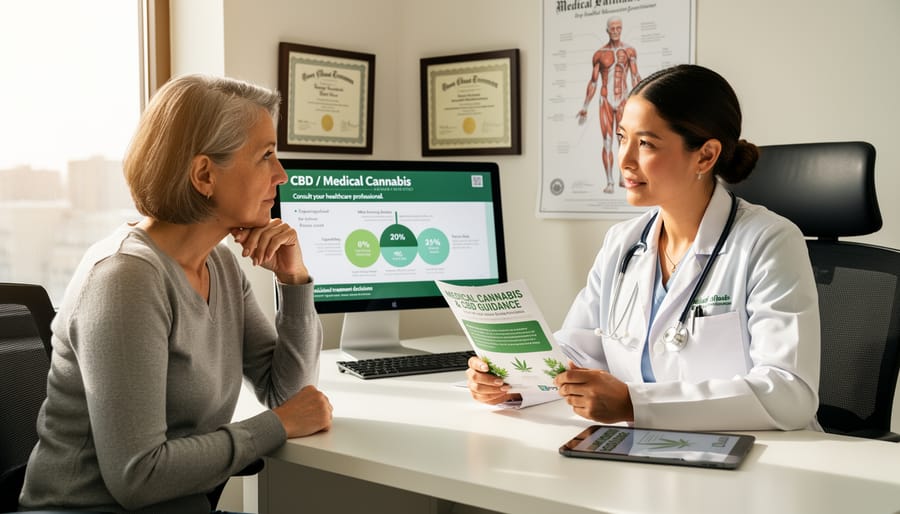
Start by booking an appointment with your healthcare provider, ideally a doctor or nurse practitioner experienced with arthritis care. Be honest about your interest in CBD or medical cannabis, your current medications, and any other treatments you’re trying. Since cannabis cannot cure arthritis or slow disease progression, frame this conversation as exploring pain relief options, not a replacement for your existing care plan.
If your provider agrees medical cannabis might help, obtain proper documentation from them authorizing its use. This ensures you’re working within Canada’s legal framework and getting supervision for dosing, side effects, and monitoring your response over time.
When choosing CBD products, prioritize quality control. Look for third-party lab testing, clear ingredient lists, and products specifically designed for therapeutic use rather than recreational vaping. If you’re considering CBD vape products, read our vape juice FAQs to understand what you’re inhaling and how to identify safe formulations.
Set realistic expectations. Given that 15 of 16 clinical trials showed no greater pain relief than placebo, CBD may not work for you, and that’s okay. If you notice benefit after a few weeks under supervision, continue. If not, discuss other evidence-based options with your provider rather than escalating doses on your own.
Frequently Asked Questions
Can cannabis cure arthritis or slow disease progression?
No. The Arthritis Society Canada is clear that cannabis cannot cure arthritis or slow the progression of the disease itself, it may only help manage pain and inflammation symptoms in some people under medical supervision.
Is medical cannabis legal in Canada for arthritis?
Yes. Medical cannabis has been a legal treatment option in Canada since 2001 for certain health conditions, including arthritis, and the Arthritis Society Canada recognizes it may help relieve pain and inflammation when used under healthcare guidance.
Should I self-medicate with recreational cannabis for my arthritis?
No. The Arthritis Society Canada says self-medicating with recreational cannabis is not a safe substitute for supervised care by a doctor or nurse practitioner, who can provide proper dosing guidance and monitor for side effects or drug interactions.
What should rheumatology patients know before using medical cannabis?
You need a document from an authorized healthcare professional, either a doctor or nurse practitioner, to access medical cannabis legally in Canada. This ensures proper supervision, appropriate product selection, and coordination with your existing arthritis treatment plan.
These questions reflect what most people ask when weighing CBD or medical cannabis for arthritis management. The answers cut through the marketing claims and point you toward the supervised, legal pathway if you decide to explore cannabis as part of your pain management strategy. Remember that even with authorization, medical cannabis is a symptom management tool, not a cure, and the clinical evidence for CBD specifically remains weak despite widespread interest in the vaping and wellness communities.
The disconnect between CBD’s popularity and the science is stark. Despite widespread marketing and enthusiastic anecdotes, randomized controlled trials consistently show CBD performs no better than placebo for arthritis pain. Fifteen of sixteen clinical studies found no benefit, and a dedicated trial in knee osteoarthritis patients came up empty. That doesn’t mean every personal experience is invalid, but it does mean we lack proof that CBD reliably works.
If you’re considering this route, skip the self-medicating with recreational products. Medical cannabis has been a legal, supervised option in Canada since 2001 for arthritis, and the Arthritis Society supports its use under proper healthcare guidance. Get documentation from an authorized professional, discuss realistic expectations, and understand that no form of cannabis will cure arthritis or stop its progression. For some patients, supervised medical cannabis may still offer relief worth exploring, but approach it with your eyes open and your doctor in the loop.